DNA Computing Principles Overview: Concepts, Methods, and Practical Information
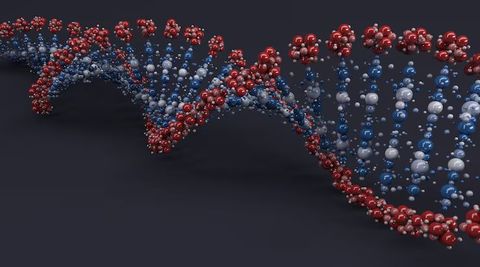
DNA computing is an interdisciplinary field that explores how biological molecules, specifically deoxyribonucleic acid (DNA), can be used to perform computational operations. Instead of relying on electronic circuits and silicon-based hardware, DNA computing uses the natural properties of DNA—such as base pairing, molecular recognition, and parallelism—to represent and process information.
This approach exists to investigate alternative ways of computation that differ fundamentally from traditional computers. DNA computing does not aim to replace electronic computers in everyday use but offers insights into solving certain types of problems by leveraging biological processes. Understanding its principles helps explain how computation can occur beyond conventional digital systems.
Context
The concept of DNA computing emerged in the mid-1990s when researchers demonstrated that DNA molecules could be used to solve a mathematical problem through biochemical reactions. This work showed that biological systems could encode and manipulate information in ways analogous to computation.
Traditional computers process information sequentially or with limited parallelism, constrained by physical hardware and energy consumption. In contrast, DNA molecules operate at the nanoscale and can participate in massive parallel reactions. This sparked interest in DNA as a potential medium for computation, particularly for problems involving large solution spaces.
DNA computing exists to:
-
Explore computation at the molecular level
-
Leverage biological parallelism
-
Investigate alternatives to silicon-based computing
-
Bridge computer science, biology, and chemistry
Its development reflects broader curiosity about how information processing can occur in natural systems.
Importance
DNA computing matters because it expands the theoretical and practical boundaries of computation.
Why DNA computing is important today:
-
Massive parallelism
Many DNA molecules can process information simultaneously. -
Energy efficiency at small scales
Molecular reactions require minimal electrical energy. -
New problem-solving approaches
Useful for combinatorial and optimization problems. -
Advances in biotechnology
Builds on progress in molecular biology and genetics. -
Foundational research value
Helps understand computation beyond electronics.
Who this topic affects:
-
Researchers in computer science and biology
-
Students studying interdisciplinary sciences
-
Data scientists exploring alternative computing models
-
Educators in emerging technology fields
-
Policymakers interested in future computing paradigms
Problems DNA computing helps address:
-
Computational limits of traditional hardware
-
Inefficiencies in solving highly parallel problems
-
Theoretical understanding of computation in nature
DNA computing provides a conceptual framework rather than immediate consumer applications.
Core Concepts of DNA Computing
DNA computing relies on several fundamental principles derived from molecular biology.
Key concepts include:
-
DNA strands as data carriers
-
Base pairing rules (A–T and C–G)
-
Hybridization and denaturation
-
Enzymatic reactions for manipulation
Information is encoded in sequences of nucleotides, and computation occurs through controlled biochemical interactions.
How Information Is Represented in DNA
In DNA computing, information is stored in the order of nucleotide bases.
Representation methods include:
-
Mapping binary values to base sequences
-
Using unique sequences as identifiers
-
Encoding variables as strands of DNA
This molecular encoding allows physical manipulation of data rather than electronic signaling.
Fundamental Methods in DNA Computing
Several methods are commonly used to perform computations with DNA.
Hybridization-Based Computation
-
Relies on complementary base pairing
-
DNA strands bind to matching sequences
-
Logical operations emerge from binding patterns
Enzyme-Based Manipulation
-
Uses enzymes to cut, copy, or modify DNA
-
Enables controlled transformation of data
-
Supports stepwise computation
Self-Assembly Techniques
-
DNA strands assemble into predictable structures
-
Computation occurs through structural formation
-
Often used in nanoscale research
These methods form the operational basis of DNA computing experiments.
DNA Computing Process Overview
A typical DNA computing workflow involves multiple stages.
General steps include:
-
Encoding a problem into DNA sequences
-
Mixing DNA strands in a controlled environment
-
Allowing biochemical reactions to occur
-
Extracting and analyzing results
The computation is carried out by natural molecular interactions rather than a central processor.
DNA Computing vs Traditional Computing
DNA computing differs significantly from electronic computing systems.
| Aspect | DNA Computing | Traditional Computing |
|---|---|---|
| Medium | Biological molecules | Electronic circuits |
| Parallelism | Extremely high | Limited by hardware |
| Speed | Slow per operation | Very fast per operation |
| Scale | Molecular/nanoscale | Macroscopic hardware |
| Energy Use | Low at reaction level | Higher electrical use |
This comparison highlights why DNA computing is suited to specific research problems rather than general-purpose tasks.
Practical Applications and Research Areas
DNA computing is primarily used in experimental and theoretical research.
Areas of exploration include:
-
Combinatorial problem solving
-
Pattern recognition research
-
Molecular diagnostics concepts
-
Cryptographic and security models
-
Bioinformatics experimentation
These applications focus on feasibility and understanding rather than deployment.
Limitations and Challenges
Despite its potential, DNA computing faces significant challenges.
Key limitations include:
-
Slow reaction times
-
Error rates in biochemical processes
-
Difficulty in scaling practical systems
-
Complex laboratory requirements
-
Result interpretation challenges
These factors limit DNA computing to controlled research environments.
Recent Updates and Trends
During 2024–2025, DNA computing research continued to evolve alongside advances in biotechnology:
-
Improved DNA synthesis and sequencing accuracy
Reduced error rates in experiments. -
Integration with nanotechnology
DNA used as a structural and computational element. -
Hybrid bio-electronic research
Combining molecular and electronic systems. -
Increased use in theoretical computer science
Studying complexity and computation models. -
Automation in laboratory workflows
More consistent experimental conditions. -
Interest in biologically inspired computing
Broader exploration of nature-based computation.
These updates indicate steady progress rather than rapid commercialization.
Ethical and Safety Considerations
DNA computing research intersects with broader bioethics concerns.
Considerations include:
-
Safe handling of biological materials
-
Clear separation from genetic modification research
-
Responsible communication of research outcomes
-
Compliance with laboratory safety standards
Ethical oversight ensures DNA computing remains a scientific exploration rather than a misuse of biotechnology.
Laws and Policies
DNA computing is influenced by regulations governing biological research.
Key policy areas include:
-
Biosafety regulations
Control laboratory handling of biological materials. -
Research ethics guidelines
Govern responsible experimentation. -
Data protection frameworks
Apply to genetic and biological data. -
Government research funding programs
Support interdisciplinary computing research. -
International scientific collaboration policies
Affect cross-border research efforts.
These frameworks ensure safe and ethical advancement of DNA computing research.
Tools and Resources
Several non-commercial tools and references support learning about DNA computing.
Educational Resources
-
Molecular biology textbooks
-
Computational theory literature
Research Tools
-
DNA sequence design software (academic use)
-
Simulation models for molecular interactions
Reference Materials
-
Peer-reviewed scientific journals
-
Conference proceedings on bio-computation
Learning Aids
-
Diagrams of DNA structure and reactions
-
Tutorials on encoding data in DNA
These resources help learners understand concepts without commercial intent.
FAQs
What is DNA computing in simple terms?
It is a way of performing computation using DNA molecules instead of electronic circuits.
Does DNA computing replace traditional computers?
No. It is mainly a research approach for specific types of problems.
Why is DNA suitable for computing?
DNA naturally stores information and interacts predictably at a molecular level.
Is DNA computing fast?
Individual operations are slow, but many occur in parallel.
Is DNA computing regulated?
Yes. It follows biosafety and research regulations.
Learning Insights
For those exploring DNA computing educationally:
-
Understand basic molecular biology first
-
Learn how information can be encoded physically
-
Study computational complexity concepts
-
Review laboratory-based research methods
-
Follow peer-reviewed scientific literature
These steps support a realistic and informed understanding of the field.
Conclusion
DNA computing represents a unique intersection of biology and computer science, demonstrating that computation is not limited to electronic systems. By using DNA molecules to encode and process information, researchers explore new models of parallelism, efficiency, and problem-solving. While DNA computing is not intended for everyday computing tasks, it provides valuable insights into alternative computation methods and the nature of information processing.
By examining DNA computing through context, importance, recent trends, regulatory considerations, tools, and common questions, readers gain a clear and balanced understanding of this emerging field. As research continues, DNA computing will remain an important area for exploring the future possibilities of computation beyond silicon-based technologies.
Disclaimer: The information provided in this article is for informational purposes only. We do not make any claims or guarantees regarding the accuracy, reliability, or completeness of the information presented. The content is not intended as professional advice and should not be relied upon as such. Readers are encouraged to conduct their own research and consult with appropriate professionals before making any decisions based on the information provided in this article.