Guide to Bearings: Basics, Uses, and Key Insights
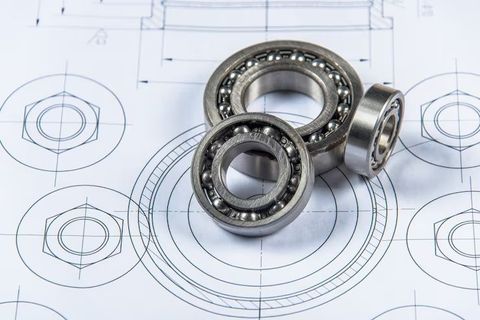
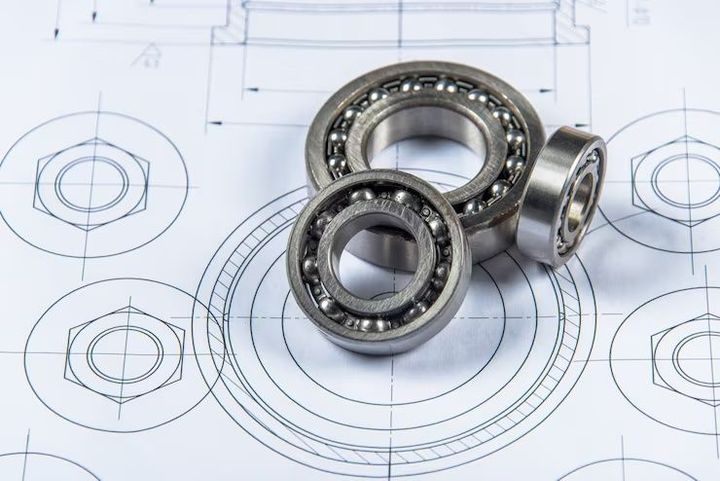
Bearings are essential mechanical components used to reduce friction between moving parts and support rotational or linear movement. They play a vital role in almost every machine or device that involves motion—from automobiles and turbines to household appliances and industrial robots.
The concept of bearings dates back to ancient civilizations, where rolling logs were used to move heavy objects. Over centuries, engineering advancements led to the creation of modern precision bearings made from steel, ceramics, and composite materials. Today, bearings are central to achieving efficiency, stability, and durability in machinery and mechanical systems.
Importance
Bearings are crucial to both industrial and consumer applications. They not only enhance motion efficiency but also reduce wear, energy consumption, and maintenance costs. A small defect in a bearing can disrupt entire production lines or critical systems like aircraft engines or wind turbines.
Key Functions of Bearings
-
Friction Reduction: Bearings minimize contact friction between surfaces in motion.
-
Load Support: They support radial and axial loads depending on the machine’s configuration.
-
Smooth Motion: Bearings enable steady rotation and controlled linear movement.
-
Vibration Control: Properly designed bearings absorb vibrations and prevent mechanical noise.
-
Energy Efficiency: By reducing mechanical resistance, they contribute to lower energy consumption.
Industries That Depend on Bearings
-
Automotive: Wheel hubs, transmissions, steering systems.
-
Aerospace: Jet engines, landing gear, and navigation systems.
-
Manufacturing: Conveyor belts, pumps, motors, and machine tools.
-
Renewable Energy: Wind turbines and hydro generators.
-
Medical Equipment: MRI scanners, dental tools, and surgical robots.
Bearings are indispensable in achieving precision and reliability in machines, influencing productivity across global industries.
Recent Updates
Between 2024 and 2025, bearing technology has evolved significantly, driven by trends in automation, sustainability, and smart manufacturing.
Recent Developments and Innovations
| Year | Trend | Description |
|---|---|---|
| 2024 | Smart Bearings | Integration of sensors that monitor temperature, vibration, and wear in real-time for predictive maintenance. |
| 2024 | Ceramic Bearings Growth | Rising use of hybrid bearings combining steel and ceramic materials for high-speed and corrosion-resistant performance. |
| 2025 | Sustainable Lubrication Solutions | Use of eco-friendly lubricants and self-lubricating bearings to minimize environmental impact. |
| 2025 | Additive Manufacturing (3D Printing) | 3D printing of custom bearing housings and prototypes for faster design cycles. |
| 2025 | AI and IoT Integration | Advanced analytics systems are being used to predict bearing failures before they occur, especially in industrial automation. |
The global bearing market continues to expand, especially in electric vehicles (EVs) and renewable energy systems where high efficiency and durability are critical.
Laws or Policies
Bearing production and use are governed by various industrial and safety standards across countries to ensure quality, reliability, and environmental compliance.
Key Regulations and Standards
| Region | Regulation/Standard | Focus Area |
|---|---|---|
| Global | ISO 15:2017 (Rolling Bearings) | Defines bearing boundary dimensions and tolerances. |
| United States | ASTM D3336 | Establishes testing methods for lubricating greases in high-speed bearings. |
| Europe | REACH and RoHS Directives | Restrict hazardous substances used in bearing materials and coatings. |
| India | BIS IS 3824:2015 | Specifies requirements for rolling bearing materials and performance standards. |
| Japan | JIS B 1515 | Covers tolerances and design standards for ball and roller bearings. |
Additionally, environmental regulations now encourage recycling of used bearings and the development of low-friction materials to reduce carbon emissions. Manufacturers are required to comply with Occupational Safety and Health Administration (OSHA) guidelines for safe handling and maintenance of rotating machinery.
Tools and Resources
Bearing engineers and maintenance teams rely on modern tools and digital resources for design, testing, and performance optimization.
Design and Analysis Tools
-
SKF Bearing Calculator: Calculates bearing life, load ratings, and lubrication requirements.
-
NSK Bearing Selector: Helps identify suitable bearings based on load and operating conditions.
-
ANSYS Mechanical: Performs stress and fatigue simulations in bearing structures.
-
KISSsoft: Software for mechanical system design, including bearing performance evaluation.
-
AutoDesk Inventor: Assists in 3D modeling and motion analysis of bearing assemblies.
Online Resources and Databases
-
BearingNet: A global platform for sourcing industrial bearings.
-
ISO Online Standards Catalogue: Provides access to global bearing standards.
-
NTN Technical Resources: Offers educational materials and maintenance guides.
These resources assist in improving design accuracy, reducing downtime, and ensuring long-term machine reliability.
FAQs
1. What are the main types of bearings?
The major types include:
-
Ball Bearings: Handle radial and axial loads; used in motors and fans.
-
Roller Bearings: Handle heavier loads with line contact; used in conveyors and gearboxes.
-
Thrust Bearings: Designed for axial load support in rotating shafts.
-
Tapered Roller Bearings: Common in automotive wheel assemblies.
-
Needle Bearings: Compact and ideal for limited-space applications.
2. How do bearings work?
Bearings reduce friction by providing smooth surfaces for relative motion between machine components. Rolling elements (balls or rollers) separate moving parts, allowing free rotation while distributing load evenly.
3. What causes bearing failure?
Common causes include improper lubrication, contamination, excessive load, misalignment, or vibration. Regular monitoring and maintenance help extend bearing life.
4. How are bearings maintained?
-
Regular lubrication using appropriate greases or oils.
-
Inspection for signs of wear, noise, or overheating.
-
Replacement at recommended service intervals.
-
Use of vibration sensors for predictive maintenance.
5. What materials are used in modern bearings?
Bearings are typically made of high-carbon chrome steel, stainless steel, ceramics, or composites. Advanced coatings like titanium nitride and DLC (Diamond-Like Carbon) improve durability and corrosion resistance.
Example Table: Bearing Type Comparison
| Bearing Type | Load Capacity | Speed | Durability | Common Applications |
|---|---|---|---|---|
| Ball Bearing | Medium | High | Moderate | Motors, fans, robotics |
| Roller Bearing | High | Medium | High | Gearboxes, heavy machinery |
| Thrust Bearing | Low–Medium | Medium | Moderate | Automotive steering, pumps |
| Tapered Roller Bearing | Very High | Medium | Very High | Trucks, railways |
| Needle Bearing | Medium | High | Moderate | Compressors, gear drives |
Conclusion
Bearings are the silent enablers of modern motion, ensuring that machines across industries operate smoothly and efficiently. From automobiles to aerospace systems, their reliability directly impacts performance, safety, and sustainability.
As industries move toward automation, digital monitoring, and eco-friendly production, bearing technology continues to evolve—integrating smart sensors, advanced materials, and AI-driven maintenance solutions. Understanding their function, care, and innovation potential helps engineers, manufacturers, and users ensure long-term system efficiency.