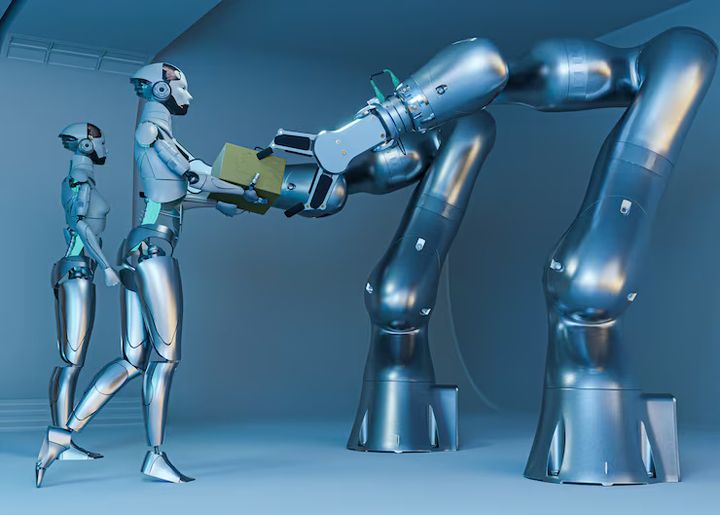
Learn the Facts: Robotic Arms for Smart Industries and Home Innovation
Robotic arms have emerged as one of the most impactful innovations in the world of automation. Originally developed for industrial manufacturing, these mechanical devices now serve a broader range of uses—from assembly lines to personal DIY projects. A robotic arm mimics the function of a human arm, offering precise movements, strength, and the ability to repeat tasks consistently. As technology has advanced, so has accessibility. Today, robotic arms are more adaptable, smarter, and cost-efficient, making them relevant across sectors like healthcare, logistics, agriculture, and even home automation.
Importance
The growing demand for productivity, precision, and labor efficiency has made robotic arms increasingly important:
- Industrial Sector: In factories, robotic arms perform tasks such as welding, painting, packaging, and assembling with unmatched consistency.
- Personal and Educational Use: Makers, students, and researchers use compact robotic arms to prototype innovations and simulate real-world manufacturing processes.
- Medical Field: Robotic arms assist in surgeries and rehabilitation therapies.
- Logistics and Warehousing: They play a crucial role in picking, sorting, and stacking, helping companies meet the surge in e-commerce demands.
Key problems robotic arms solve include reducing human error, improving safety in hazardous environments, and lowering long-term operational costs.
Recent Updates
In the past year (2024–2025), robotic arms have seen significant advancements:
| Feature | Developments (2024–2025) |
|---|---|
| AI Integration | Machine learning algorithms help arms adapt to new tasks autonomously. |
| Cost Reduction | Increased production and innovation have made entry-level arms affordable for small businesses. |
| Precision Control | Enhanced with LiDAR, 3D sensors, and real-time feedback systems. |
| Plug-and-Play Kits | Kits aimed at students and hobbyists have become more available globally. |
Laws or Policies
Governments and regulators are updating frameworks to address the use and impact of robotics:
ISO 10218 and ISO/TS 15066: These international standards regulate safety in industrial robotic systems.
Occupational Safety and Health Administration (OSHA) in the U.S. mandates safety protocols for robot-assisted workspaces.
India and EU Guidelines: Countries like India and members of the EU are investing in policy frameworks that balance innovation with labor impact.
Import/Export Rules: Importation of robotic parts may be subject to specific taxes and tariffs in some countries.
Compliance with these regulations is crucial for manufacturers and users alike.
Tools and Resources
Here are some recommended tools, platforms, and services:
Popular Robotic Arms
| Robotic Arm Model | Suitable For | Key Feature |
|---|---|---|
| UFactory xArm 6 | Industrial/Research | 6 DOF, AI-ready, 5 kg payload |
| DOBOT Magician | Education/Personal | 4 DOF, multifunctional, programmable |
| Franka Emika Panda | Labs/Small industries | User-friendly UI, fast deployment |
| ABB IRB 1100 | Industrial | Compact, strong, industrial-grade |
Software & Platforms
- ROS (Robot Operating System): Open-source framework for robotic programming
- Blockly & Python: Common for entry-level coding and automation tasks
- RoboDK: Offline robot programming and simulation
- Arduino/Raspberry Pi: Ideal for building and controlling personal robotic arm projects
Learning Resources
- MIT OpenCourseWare: Robotics
- Udemy & Coursera: Robotic Arm Development Courses
- GitHub: Open-source robotic arm control projects
FAQs
Q1. What is a robotic arm used for?
A robotic arm is used to perform repetitive or precise tasks, including welding, sorting, assembly, painting, and educational programming.
Q2. Are robotic arms safe for human environments?
Yes, especially collaborative robots (cobots) are designed with safety features like force sensors and automatic shutoff to safely work near humans.
Q3. How much does a robotic arm cost?
Prices vary widely—from around $300 for basic DIY kits to $50,000+ for advanced industrial models. Entry-level educational arms are available under $1000.
Q4. Can a beginner build a robotic arm?
Yes. With kits and online tutorials, beginners can build functional robotic arms using microcontrollers like Arduino or Raspberry Pi.
Q5. What programming languages are used for robotic arms?
Common languages include Python, C++, JavaScript, and proprietary robotic platforms like RoboDK or ROS.
Conclusion
Robotic arms are reshaping how tasks are executed in both large-scale industries and personal creative spaces. With technological advancements lowering costs and improving ease of use, they are more accessible than ever. Whether you're optimizing a manufacturing line or exploring robotics as a hobby, robotic arms offer powerful possibilities that continue to evolve.