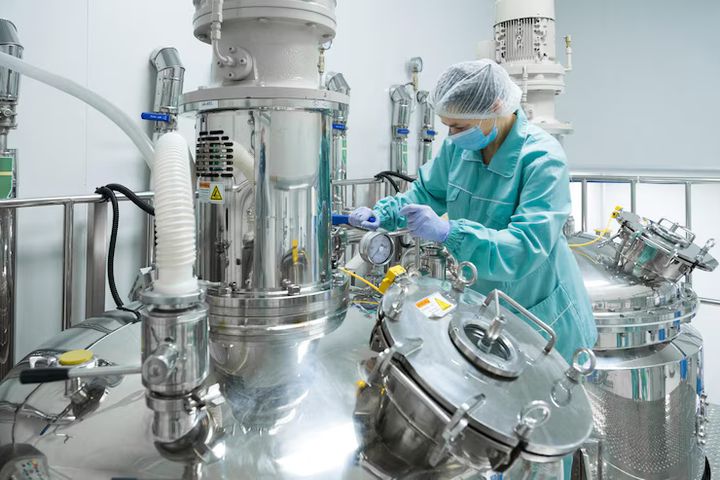
The Comprehensive Guide on Bioreactor
A bioreactor is a controlled vessel that supports biological reactions—often involving cells, enzymes, or microorganisms. It provides an environment with regulated temperature, pH, oxygen, and mixing, enabling processes like fermentation, cell culture, biofuel production, and wastewater treatment. Bioreactors emerged in the early 20th century to scale laboratory microbial processes for vaccines and industrial enzymes. Today, they are essential in pharmaceuticals, new food production, environmental systems, and research.
Importance: Why Bioreactors Matter in Today’s World
Medical & Biopharma Impact
Bioreactors are critical for manufacturing vaccines, monoclonal antibodies, gene therapies, and regenerative treatments. The demand for reliable, scalable biologics continues to rise, especially with chronic illnesses and innovative therapies in focus
Sustainability & Environmental Use
They allow sustainable waste treatment—through biofilm and membrane bioreactors—and produce biofuels and biochemicals from waste, driving green innovation
Industrial & Food Innovation
Bioreactors fuel fermentation in food/drink production and cultivated meat initiatives. New processes have achieved up to 74 % protein yield from CO₂ and electricity, promising sustainable food solutions.Modular systems support rapid scaling for niche biotech needs
Research & Education
Lab-scale bioreactors help study cellular behavior, optimize processes, and teach biotech fundamentals. Computational studies enhance understanding of mixing and oxygenation efficiency
Recent Updates: Trends & Innovations Single-Use Bioreactors Surge
Adoption of disposable systems is growing—expected CAGR ~11–12 % through 2028–2030—and now accounts for nearly half of installations .
They reduce contamination risk, water use (~45 %), energy, and initial costs
Automation & Digital Control
Over 60 % of manufacturers now use fully automated bioreactors with digital monitoring (pH, oxygen, biomass).
Integration with AI and data analytics allows real-time adjustments and improved reproducibility
Modular & Scalable Designs
Customized, modular bioreactors enable flexible production across multiple scales—vital for cell/gene therapies and personalized medicine
Sustainability Innovations
Integration of renewable energy (e.g. solar-powered facilities) and use of waste feedstocks (e.g., food or CO₂) support circular bioprocessing models .
Advanced reactor materials now include biodegradable or biocompatible plastics .
Laws & Policies: Regulation and Standards
Manufacturing Standards (cGMP & ASME BPE)
Bioreactor production for biopharma must meet current Good Manufacturing Practices (cGMP) to ensure consistent quality, sterility, and documentation
Design and equipment must adhere to the ASME BPE standards, covering bioprocessing fluid systems and cleanability since 2022
Regulatory Oversight
FDA and EMA regulate approval of biologics, requiring process validation, contamination prevention, and qualified equipment.
Policies encourage single-use tech for contamination control and process flexibility
Environmental & Wastewater Compliance
Wastewater bioreactors must follow local environmental rules—e.g., for sludge and effluent control in biofilm or membrane systems .

Tools & Resources: Helping You Learn & Apply Bioreactor Technology
Market Research & Trends
Verified Market Research and ResearchAndMarkets offer in-depth bioreactor market forecasts
Design Standards & Guidelines
ASME BPE standard (ANSI-approved).
cGMP compliance checklists for bioprocessing facilities.
Lab & Process Simulation
CFD software (e.g., Basilisk) and open-access frameworks simulate mixing, oxygen transfer, and shear stresses
Academic & Industry Research
arXiv offers studies on novel reactors like rocking bioreactors and advanced impeller designs
Wikipedia articles cover biofilm reactors, membrane bioreactors, and anaerobic systems .
Kits & Small-Scale Systems
Educational bioreactor kits like Chi.Bio support hands-on learning and AI-based control experiments
FAQs
Q: What are the main bioreactor types?
They include:
Batch – load all media and culture at start; simple control.
Fed-batch – nutrients added over time; most common (~62 % market share)
Continuous – steady input/output; growing fastest (~12.4 % CAGR)
Single-use – disposable bags with automation; ideal for flexibility and contamination control .
Q: Why are single-use bioreactors popular?
They lower cleaning needs, reduce contamination, support modular workflows, save time between batches, and reduce water and energy usage .
Q: How does automation improve bioreactor performance?
Real-time sensors and AI instantaneously adjust temperature, pH, oxygen, leading to consistent yields, reduced human error, and traceability
Q: What’s a digital twin or simulation in this field?
Researchers use CFD and digital frameworks to simulate fluid dynamics, mixing, oxygen transfer, and shear forces, enabling optimized design (e.g., impeller or rocking bioreactors)
Q: Can bioreactors help tackle climate or resource issues?
Yes—bioreactors can convert CO₂ into protein (74 % yield in new systems), treat wastewater, and produce biofuels, contributing to climate resilience and resource efficiency
Final Thoughts
Bioreactors are vital to modern science, industry, and sustainability. From producing lifesaving drugs and eco-friendly fuels to enabling food innovations like cultivated meat, their impact spans many fields. Market trends show a clear move toward single-use, automated, sustainable, and modular systems—all governed by rigorous regulatory standards.
For students, startups, or curious professionals, combining hands-on kits, simulations, and digital tools can deepen your understanding of bioprocessing principles. In a world facing healthcare, food, and environmental challenges, bioreactors stand as a core technology shaping the future.
Let this guide serve as a foundation—whether you're exploring biopharma, environmental biotech, or industrial fermentation, there's much to learn and innovate in the realm of bioreactors.