Comprehensive Guide to Gaskets: Types, Features, Applications, and Leading Suppliers
Gaskets are essential mechanical components used to create a tight seal between two or more surfaces. Their primary purpose is to prevent leakage of liquids, gases, or other materials under varying pressures and temperatures. Gaskets are found in countless applications, from household appliances to industrial machinery, pipelines, and aerospace engines.
They are typically made of materials such as rubber, metal, graphite, or composite substances, each selected based on the required resistance to heat, pressure, or chemicals. Over time, gaskets have evolved with innovations in material science, allowing industries to operate safely and efficiently.
Importance: Why gaskets matter today
Gaskets play a critical role in modern industries and everyday life. Their importance can be seen in:
-
Industrial operations – Oil, gas, and chemical industries rely on gaskets to prevent leaks in high-pressure systems.
-
Automotive sector – Gaskets ensure engine efficiency by sealing combustion chambers and fluid systems.
-
Healthcare equipment – Medical devices and pharmaceutical machinery require gaskets to maintain sterility and safety.
-
Environmental safety – Proper sealing helps reduce emissions and contamination risks.
-
Consumer appliances – Refrigerators, washing machines, and other home devices use gaskets for efficiency.
Without reliable gaskets, industries would face costly breakdowns, environmental hazards, and significant safety risks.
Recent updates and trends in gaskets (2024–2025)
In recent years, gasket technology has advanced to meet growing industrial demands:
| Trend (2024–2025) | Impact |
|---|---|
| Use of eco-friendly materials | Growing demand for recyclable and sustainable gasket materials. |
| Digital manufacturing and CAD design | Improves precision in custom gasket production. |
| High-performance materials | Expansion of graphite, PTFE, and metal gaskets for extreme conditions. |
| 3D printing in gasket prototyping | Reduces production time and enables faster customization. |
| Rising demand in renewable energy | Gaskets are crucial in wind turbines, solar power systems, and hydrogen plants. |
For example, in 2024, several industries began adopting AI-based predictive maintenance to monitor gasket wear and avoid downtime in critical machinery.
Laws and policies influencing gasket use
Gasket production and use are subject to national and international standards. These ensure performance, safety, and environmental compliance:
-
ISO Standards – ISO 3601 and other guidelines define gasket performance, material quality, and leak testing methods.
-
Environmental regulations – Many countries restrict the use of asbestos-based gaskets due to health hazards.
-
Automotive standards – The auto industry must comply with emission regulations, where gasket efficiency directly impacts performance.
-
Food and pharma compliance – Gaskets used in these sectors must follow FDA or EU food-grade safety requirements.
-
Occupational safety rules – Employers must use compliant gaskets in equipment to reduce leakage risks in workplaces.
These rules not only safeguard industries but also protect the environment and consumers.
Types, features, and applications of gaskets
Common types of gaskets
-
Metal gaskets – Used in high-pressure and high-temperature environments such as oil refineries.
-
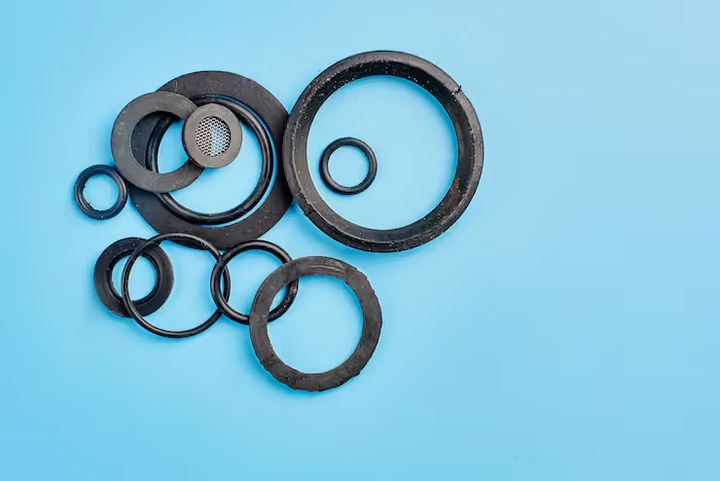
Rubber gaskets – Flexible and commonly used in household appliances and automotive sealing.
-
Graphite gaskets – Resistant to heat and chemicals, making them suitable for chemical plants.
-
PTFE (Teflon) gaskets – Known for chemical resistance in pharmaceutical and food industries.
-
Spiral wound gaskets – Used in pipelines and power plants for secure, high-stress sealing.
Key features of gaskets
-
Resistance to heat and pressure.
-
Ability to prevent leaks effectively.
-
Durability under long-term use.
-
Compatibility with diverse chemicals.
-
Customizable designs for industry-specific applications.
Applications across industries
-
Automotive engines and exhaust systems
-
Power plants and renewable energy equipment
-
Oil, gas, and petrochemical industries
-
Pharmaceutical and food processing machinery
-
Household and industrial appliances
Tools and resources for gasket selection and design
To make informed choices, engineers and procurement specialists rely on a variety of tools and resources:
-
Material compatibility charts – To match gasket materials with chemical environments.
-
Seal calculators – Online tools that help determine gasket size and thickness.
-
CAD design software – Used for custom gasket modeling and prototyping.
-
Industry standards websites – ISO, ASTM, and other references for compliance.
-
Supplier directories – Global platforms that list certified gasket manufacturers and distributors.
These resources help businesses find the right gasket for their operational needs while ensuring compliance and efficiency.
Leading gasket suppliers worldwide
While there are many manufacturers globally, some of the widely recognized names in the gasket industry include:
-
Flexitallic – Known for spiral wound gaskets and sealing solutions.
-
Garlock Sealing Technologies – Specializes in high-performance industrial gaskets.
-
KLINGER Group – Provides sealing products for energy and chemical industries.
-
Parker Hannifin – Offers a wide range of sealing and fluid control technologies.
-
Victor Reinz – Well-known in the automotive gasket market.
These suppliers operate globally, setting high standards for quality, performance, and innovation in gasket production.
FAQs on gaskets
What is the lifespan of a gasket?
It depends on the application, material, and operating conditions. Industrial gaskets may last years, while automotive gaskets may require replacement more frequently.
Why are asbestos gaskets no longer common?
Due to health and environmental risks, asbestos-based gaskets have been phased out in many countries.
Can gaskets be reused?
In most critical applications, reusing gaskets is not recommended, as they may lose sealing efficiency after removal.
How do I choose the right gasket material?
Consider factors like temperature, pressure, chemical exposure, and mechanical stress before selecting a material.
Are custom gaskets available?
Yes. Many suppliers provide tailored gasket solutions using digital design and precision manufacturing.
Conclusion
Gaskets may appear as simple sealing components, but their role is critical across industries, from energy and automotive to healthcare and household appliances. With the rise of sustainable materials, digital manufacturing, and global compliance standards, gasket technology continues to evolve in line with industrial needs.
By understanding the types, features, applications, and regulations surrounding gaskets, engineers, businesses, and consumers can make better-informed decisions. Leading suppliers continue to push innovation, ensuring that gaskets remain reliable and essential in the modern industrial landscape.