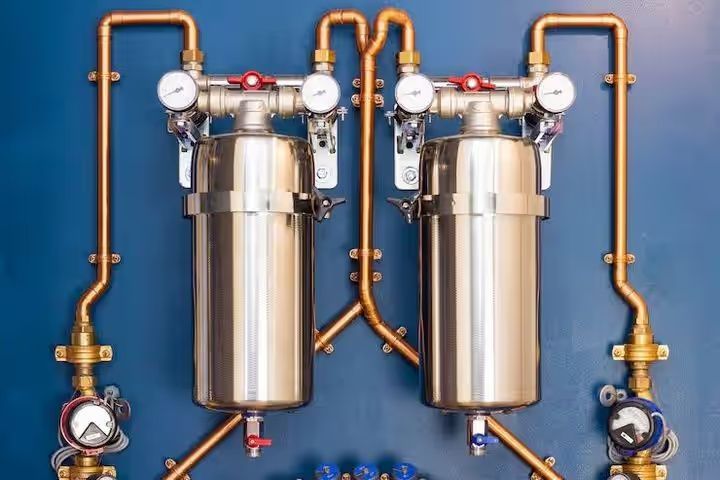
Pressure Vessel Manufacturer: A Comprehensive Guide to Design, Safety, and Performance
Pressure vessels are essential components used across industries such as chemical processing, power generation, oil refining, and pharmaceuticals. They are designed to contain gases or liquids at pressures significantly different from the surrounding environment. The main goal of a pressure vessel manufacturer is to produce containers that can withstand internal or external pressure without failure, deformation, or leakage.
These vessels come in various shapes—cylindrical, spherical, and conical—depending on the intended use. Their construction requires careful selection of materials such as carbon steel, stainless steel, or composite metals. The design process follows international codes that ensure safety, durability, and performance under extreme conditions.
Why Pressure Vessel Manufacturing Matters
Pressure vessels are the backbone of several industrial processes that involve heating, cooling, and chemical reactions under pressure. A well-designed vessel improves process efficiency, reduces risks, and ensures environmental safety.
The importance of this manufacturing field lies in:
-
Safety Assurance: Preventing catastrophic failures or leaks that could lead to accidents.
-
Process Optimization: Maintaining stable pressure levels for consistent product quality.
-
Regulatory Compliance: Meeting international standards such as ASME Section VIII or PED (Pressure Equipment Directive).
-
Sustainability: Supporting eco-friendly industrial operations through efficient material usage and waste reduction.
These vessels affect a wide range of sectors—refineries rely on them for fuel processing, power plants for steam generation, and the food industry for sterilization and storage.
Recent Updates and Industry Trends
The pressure vessel manufacturing industry has evolved significantly with advances in materials science and digital engineering.
Recent developments include:
| Year | Trend | Impact |
|---|---|---|
| 2024 | Adoption of AI-based inspection tools | Enhances defect detection and improves reliability |
| 2023 | Introduction of composite pressure vessels | Reduces weight and increases corrosion resistance |
| 2022 | Integration of IoT monitoring systems | Enables real-time pressure and temperature tracking |
| 2021 | Growth in hydrogen storage applications | Expands use of vessels in renewable energy sectors |
Additionally, additive manufacturing (3D printing) has emerged as a promising method for producing vessel components with complex geometries. Automation and robotics are also improving precision welding and reducing human error during fabrication.
Global demand is expected to rise with expanding oil and gas projects, chemical production, and clean energy initiatives such as hydrogen and biofuel plants.
Laws, Standards, and Compliance Requirements
Pressure vessel manufacturers operate under strict laws and codes that ensure product safety and reliability. These standards vary across countries but share a common goal: preventing pressure-related failures that can endanger lives and property.
Key global regulations include:
-
ASME Boiler and Pressure Vessel Code (USA): Governs the design, fabrication, and testing of pressure-containing equipment.
-
PED 2014/68/EU (Europe): Sets requirements for equipment operating above 0.5 bar pressure.
-
Indian Boiler Regulations (IBR): Regulates design and inspection for boilers and pressure vessels in India.
-
ISO 16528: Defines global performance standards for pressure equipment.
Manufacturers must also comply with welding certifications, material traceability, and periodic inspections. Non-destructive testing (NDT) methods like ultrasonic, radiographic, and magnetic particle testing are commonly used to verify vessel integrity.
Governments are increasingly integrating sustainability goals into these regulations, encouraging the use of recyclable materials and energy-efficient manufacturing processes.
Tools and Resources in Pressure Vessel Engineering
Modern pressure vessel manufacturing relies on advanced digital tools and software to improve accuracy and safety.
Popular tools and resources include:
-
PV Elite: For designing and analyzing pressure vessels and heat exchangers.
-
Compress Software: Used for mechanical design calculations and compliance checks.
-
AutoPIPE Vessel: Provides 3D modeling and code-compliance verification.
-
Finite Element Analysis (FEA) Tools: Help predict stress distribution under varying pressure and temperature conditions.
-
Material Selection Databases: Support engineers in choosing the right alloy or composite for specific applications.
Web resources and platforms:
-
ASME Knowledge Center: Offers technical papers and compliance guides.
-
NDT Resource Hub: Provides insights into inspection methods and quality control.
-
Engineering ToolBox: Supplies formulas and design reference data for pressure calculations.
These tools enhance collaboration among engineers, designers, and inspectors, ensuring each step—from concept to commissioning—is optimized for performance and safety.
Frequently Asked Questions (FAQs)
1. What materials are commonly used for pressure vessel manufacturing?
Carbon steel, stainless steel, and alloy steel are widely used due to their strength, corrosion resistance, and weldability. Composite materials are gaining popularity in lightweight and high-pressure applications.
2. How are pressure vessels tested for safety?
They undergo hydrostatic and pneumatic pressure tests to verify structural integrity. Non-destructive tests like ultrasonic or radiographic inspections help detect hidden defects.
3. What are the main types of pressure vessels?
The most common types include storage vessels, heat exchangers, reactors, and separators. Each serves a unique function in processing or storing pressurized substances.
4. What causes pressure vessel failures?
Common causes include material fatigue, improper welding, corrosion, and over-pressurization. Regular maintenance and inspection minimize these risks.
5. How are new technologies changing vessel manufacturing?
AI-driven design tools, IoT-based monitoring, and additive manufacturing are transforming production, enabling predictive maintenance and enhanced performance.
Conclusion
Pressure vessel manufacturing plays a pivotal role in industrial infrastructure, ensuring the safe containment and transport of pressurized materials. Through innovation in materials, digital tools, and regulatory frameworks, the industry continues to evolve toward greater efficiency and environmental responsibility.
As global demand for energy, chemicals, and sustainable technologies grows, pressure vessels will remain vital to meeting these needs safely and efficiently. By understanding the principles of design, safety, and compliance, industries can ensure reliable performance while aligning with modern sustainability and safety goals.