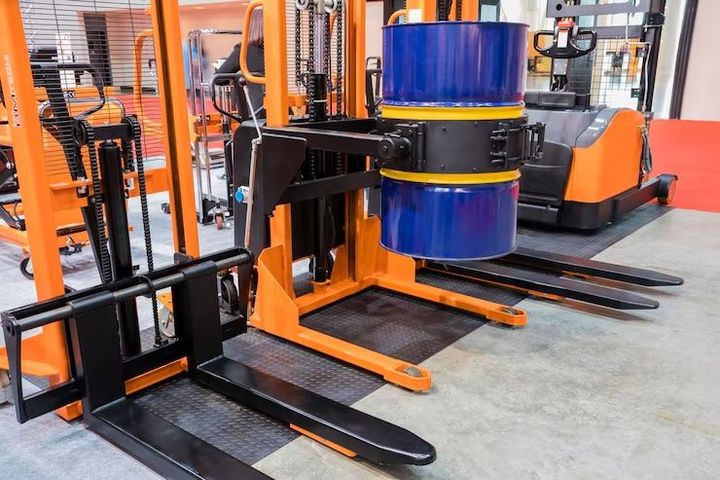
Guide to Palletizers & Depalletizers: Functions, Benefits, and Insights
In modern industries, the movement of goods is as important as their production. Palletizers and depalletizers are machines designed to handle this need efficiently. A palletizer arranges products into stacks or loads them onto pallets for storage or transport, while a depalletizer removes products from pallets for processing, packaging, or distribution.
These systems emerged in the mid-20th century when industries sought ways to automate heavy and repetitive lifting tasks. Today, they are a backbone of supply chains in food and beverages, pharmaceuticals, chemicals, consumer goods, and logistics sectors. By reducing manual handling, they ensure safer operations and faster throughput in warehouses and factories.
Importance: Why palletizers and depalletizers matter today
The role of these machines has expanded as industries face rising demand, tight labor markets, and the push for efficiency. Their importance can be summarized as follows:
-
Efficiency in operations – Speeds up packing and unpacking processes.
-
Reduced labor strain – Minimizes physical effort, lowering the risk of workplace injuries.
-
Consistency and precision – Ensures uniform stacking, reducing damage during storage and transport.
-
Scalability – Supports large-scale operations in manufacturing and logistics.
-
Cost optimization – Improves productivity while lowering handling errors and material wastage.
For industries dealing with high-volume goods, palletizers and depalletizers are not optional—they are essential for keeping supply chains smooth and reliable.
Recent updates and trends (2024–2025)
The field of palletizing and depalletizing has seen rapid innovation in the last few years.
| Trend (2024–2025) | Key Development |
|---|---|
| Robotic systems | Use of multi-axis robots for flexible palletizing and depalletizing of various product shapes. |
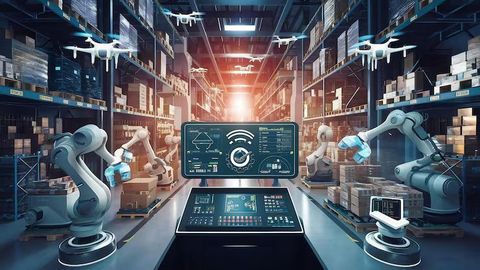
| AI and vision technology | Cameras and AI allow machines to recognize irregular packages and adjust stacking patterns. |
| Collaborative robots (cobots) | Designed to safely work alongside human workers in hybrid production lines. |
| Energy-efficient designs | New systems consume less power, aligning with sustainability goals. |
| Compact modular systems | Smaller, modular palletizers make automation accessible for small and medium enterprises (SMEs). |
For example, in 2024 many logistics firms adopted vision-guided depalletizers to handle mixed loads, a challenge previously requiring manual labor.
Laws and policies affecting palletizers and depalletizers
These machines are subject to occupational safety and equipment standards that vary by country but generally focus on safe handling and workplace ergonomics. Key regulatory areas include:
-
Occupational safety standards – Agencies like OSHA (U.S.), HSE (U.K.), and equivalent bodies in other regions regulate safe machine design and usage.
-
Machine guarding and automation laws – Require protective barriers, emergency stop functions, and safe operating procedures.
-
Energy consumption and emissions regulations – Standards encourage energy-efficient systems to reduce environmental impact.
-
Industry-specific compliance – Food and pharmaceutical sectors often require hygienic designs for palletizing equipment to prevent contamination.
Compliance ensures not only safer working conditions but also smoother integration of equipment into regulated industries.
Functions and benefits of palletizers and depalletizers
| Function | Palletizers | Depalletizers |
|---|---|---|
| Primary role | Stack and load products onto pallets | Unload products from pallets |
| Industry usage | Warehouses, factories, packaging | Distribution centers, production lines |
| Efficiency | High throughput and uniform stacking | Smooth unloading without damage |
| Labor support | Reduces manual stacking | Reduces manual unpacking |
-
Increased operational speed.
-
Reduced human error in material handling.
-
Safer workplaces with less repetitive strain.
-
Scalability for different industries and product types.
-
Support for sustainability by minimizing packaging waste through precise stacking.
Tools and resources for palletizer and depalletizer management
Industries often use specialized tools and resources to optimize these systems:
-
Simulation software – Models stacking patterns before real-world application.
-
Vision systems – AI-guided cameras improve accuracy in handling mixed loads.
-
Performance monitoring dashboards – Track throughput, downtime, and maintenance needs.
-
Maintenance scheduling tools – Apps for predictive maintenance planning.
-
Standards and compliance resources – Access to ISO, ANSI, or IEC guidelines.
-
Training modules – Online courses for operators and technicians on safe and efficient machine use.
These resources help maximize return on investment while ensuring compliance and efficiency.
FAQs on palletizers and depalletizers
What is the main difference between palletizers and depalletizers?
A palletizer stacks and organizes products onto pallets, while a depalletizer unloads them for further processing or distribution.
Are robotic palletizers better than conventional ones?
Robotic systems provide flexibility and can handle multiple product types, but conventional palletizers may be more cost-effective for uniform, high-volume operations.
Can small businesses use palletizers?
Yes, compact and modular systems are increasingly available for small and medium-sized businesses.
What safety features are required in palletizing systems?
Common features include machine guarding, emergency stop functions, load sensors, and operator training.
How do palletizers and depalletizers support sustainability?
By reducing energy use, minimizing material waste, and ensuring precise handling, they contribute to greener supply chain practices.
Conclusion
Palletizers and depalletizers are vital to industrial and logistics operations, bridging the gap between production and distribution. As industries embrace automation, these machines provide efficiency, safety, and sustainability benefits.
With technological advances like robotics, AI, and vision systems, they are becoming more versatile and accessible, even for smaller enterprises. Understanding their functions, compliance requirements, and tools ensures businesses can adopt them effectively and responsibly.