A Guide to Testing and Measurement Equipment
Testing and measurement equipment form the foundation of quality control, research, and industrial reliability. These instruments are used to assess, verify, and ensure that materials, products, and systems meet specific technical standards. They play a critical role across industries such as electronics, manufacturing, healthcare, energy, and aerospace.
The concept of measurement dates back centuries, but in modern industry, precision has become an absolute requirement. From testing voltage in an electrical circuit to analyzing material hardness or environmental conditions, measurement tools ensure accuracy, performance, and compliance.
Common categories of testing and measurement equipment include:
| Equipment Type | Primary Function | Common Application |
|---|---|---|
| Multimeters | Measure voltage, current, resistance | Electrical testing |
| Oscilloscopes | Display waveforms and signals | Electronics diagnostics |
| Spectrum Analyzers | Measure frequency and power | Telecommunication systems |
| Pressure Gauges | Monitor fluid and gas pressure | Industrial process control |
| Thermometers and Sensors | Track temperature variations | HVAC and laboratory analysis |
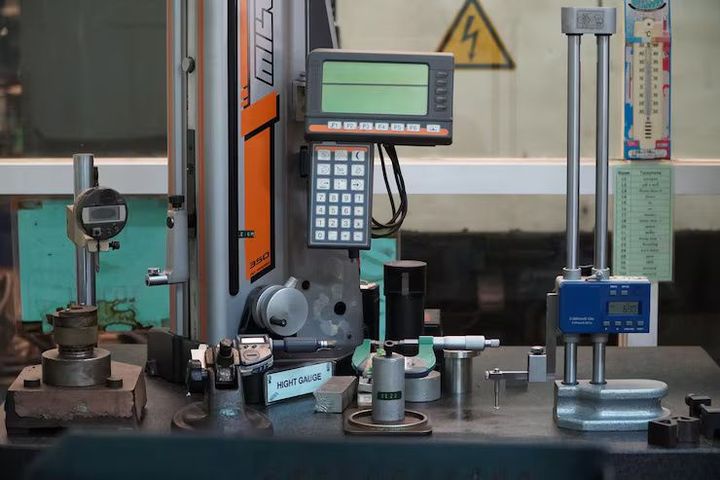
| Calipers and Micrometers | Measure dimensions and thickness | Mechanical engineering |
| Data Loggers | Record environmental or operational data | Energy, transportation, and research |
These tools ensure that systems perform safely and efficiently, allowing industries to maintain product consistency and meet customer expectations.
Why Testing and Measurement Equipment Matters
Accurate testing and measurement are vital for innovation, reliability, and compliance in virtually every technical field. Modern industries rely on these tools to maintain safety standards, improve efficiency, and drive scientific discovery.
Key reasons testing and measurement equipment is essential:
-
Ensures Product Quality: Verifies that manufactured items meet performance standards and design specifications.
-
Enhances Safety: Detects potential failures or malfunctions before they lead to accidents.
-
Supports Research and Development: Enables engineers and scientists to test hypotheses and develop new technologies.
-
Facilitates Compliance: Helps organizations meet national and international certification requirements.
-
Reduces Waste and Costly Errors: Identifies defects early in the production process, minimizing material loss.
Industries most impacted by measurement technology:
-
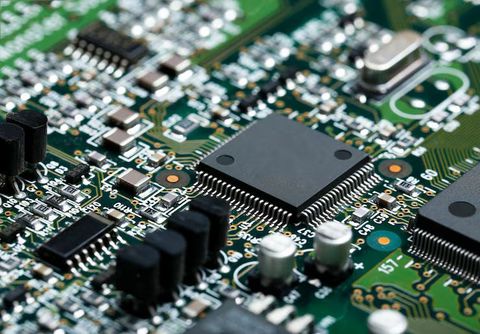
Electronics and Semiconductors: Testing voltage, current, and signal integrity.
-
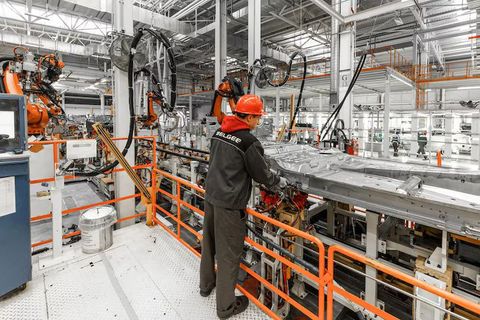
Automotive Manufacturing: Calibrating sensors, engines, and emissions systems.
-
Pharmaceuticals and Healthcare: Monitoring laboratory instruments and sterilization levels.
-
Renewable Energy: Measuring power efficiency in solar and wind installations.
-
Aerospace and Defense: Ensuring precision under extreme environmental conditions.
Without reliable measurement tools, the global economy would face frequent quality lapses, safety failures, and inefficiencies in production.
Recent Updates and Technological Trends (2024–2025)
The testing and measurement equipment sector has experienced significant innovation in the past two years, driven by automation, artificial intelligence, and sustainability.
| Trend | Description | Industry Impact (2024–2025) |
|---|---|---|
| AI-Powered Analytics | Machine learning algorithms process test data to identify anomalies. | Speeds up diagnostics and enhances predictive accuracy. |
| Wireless and Remote Testing | IoT-enabled devices transmit real-time data from remote locations. | Enables efficient monitoring across distributed systems. |
| Miniaturized Instruments | Compact, portable tools for on-site testing and diagnostics. | Expands accessibility for field technicians. |
| Digital Twin Integration | Virtual simulation of testing environments for performance forecasting. | Reduces testing time and resource use. |
| Green Measurement Systems | Energy-efficient instruments with recyclable components. | Promotes sustainability in industrial applications. |
In 2025, industries are increasingly adopting cloud-based data management for storing and analyzing test results securely. Additionally, 5G technology is improving the responsiveness of wireless testing systems, especially in remote industrial and defense applications.
Smart sensors and self-calibrating instruments are also gaining popularity, reducing the need for manual adjustments and enhancing consistency across production lines.
Regulations and Global Standards
Testing and measurement processes are governed by international standards to ensure reliability, precision, and safety. These regulations define calibration procedures, environmental conditions, and acceptable error margins.
| Standard/Authority | Region | Focus Area |
|---|---|---|
| ISO/IEC 17025 | Global | Accreditation for testing and calibration laboratories |
| NIST (National Institute of Standards and Technology) | USA | Measurement standards and calibration procedures |
| BIS (Bureau of Indian Standards) | India | National testing and calibration norms |
| IEC (International Electrotechnical Commission) | Global | Electrical and electronic testing standards |
| ASTM International | Global | Material testing and mechanical standards |
Key policy updates (2024–2025):
-
ISO updated its 17025 calibration guidelines in 2024 to include digital traceability methods for smart instruments.
-
India’s National Accreditation Board for Testing and Calibration Laboratories (NABL) introduced a digital verification system for test certificates in early 2025.
-
European directives now require eco-friendly designs in laboratory instruments under the EU Green Compliance Act (effective mid-2025).
These standards ensure that testing data remains accurate, traceable, and globally accepted across industries.
Tools and Resources for Testing and Measurement Professionals
The growth of digital technology has made testing more efficient and accessible through various online tools, software, and educational platforms.
Recommended Tools and Resources:
| Tool/Platform | Purpose | Ideal For |
|---|---|---|
| Fluke Connect App | Monitors electrical testing data in real time | Field engineers |
| Keysight PathWave | Data analytics and automation for electronic testing | Research labs |
| LabVIEW Software | Custom test automation programming | Engineers and developers |
| Calibration Management Software (CMS) | Tracks instrument calibration schedules and results | Quality assurance teams |
| NI Measurement Studio | Integrates with Microsoft tools for signal analysis | Software engineers |
Best Practices for Testing and Measurement:
-
Regularly calibrate all equipment to maintain precision.
-
Store data securely using traceable documentation.
-
Use environmental controls (temperature, humidity) during sensitive tests.
-
Train technicians in international testing standards.
-
Implement digital platforms for automation and traceability.
These practices improve reliability, minimize measurement uncertainty, and ensure compliance with regulatory standards.
Frequently Asked Questions (FAQs)
1. What is the primary purpose of testing and measurement equipment?
Its main purpose is to evaluate the performance, quality, and reliability of materials, components, or systems against defined standards.
2. How often should testing equipment be calibrated?
Calibration frequency depends on the equipment type and usage intensity but is typically performed annually or after significant operational changes.
3. What are the most common measurement instruments in electronics?
Common tools include multimeters, oscilloscopes, function generators, and spectrum analyzers used for electrical testing and diagnostics.
4. How does automation improve testing accuracy?
Automated systems eliminate human error, perform continuous monitoring, and provide real-time data for faster decision-making.
5. What are the challenges in testing and measurement today?
Challenges include maintaining data integrity, adapting to digital transformation, and ensuring compliance with evolving international standards.
Conclusion
Testing and measurement equipment represent the backbone of quality assurance, innovation, and safety across industries. From laboratories to industrial plants, these instruments ensure that systems operate reliably and meet regulatory expectations.
As the world moves toward smarter and greener technologies, testing equipment is becoming more connected, intelligent, and energy-efficient. The integration of AI, IoT, and cloud computing is transforming how industries collect, analyze, and act on test data.
By following global standards, utilizing advanced digital tools, and prioritizing continuous calibration, organizations can ensure that their measurement systems remain accurate, compliant, and future-ready.
Testing and measurement equipment not only measure performance—they define progress in science, technology, and global industry.