Guide to Cryogenic Tanks: Storage, Applications, Technology & Key Industry Trends
Cryogenic tanks are specialized storage vessels designed to hold extremely low-temperature liquids such as liquid nitrogen, liquid oxygen, LNG, liquid argon, and liquid hydrogen. These materials must be maintained at temperatures far below the freezing point to stay in liquid form. The tanks use advanced insulation, durable steel construction, and pressure-control systems to preserve the required low temperatures safely.
Cryogenic storage plays a vital role in industries such as energy, healthcare, food processing, research laboratories, and manufacturing. With global demand for liquefied gases rising, cryogenic tanks have become essential infrastructure in many sectors.
Importance of Cryogenic Storage Systems
Cryogenic storage technology ensures that temperature-sensitive materials remain stable throughout handling, transportation, and long-term storage. The ability to transport liquefied gases in compact volumes improves efficiency, reduces energy consumption, and enables safer processing of gases that are difficult to store at normal temperatures.
These tanks support everything from laboratory experiments to large-scale hydrogen energy projects, making them key equipment in industrial development, scientific research, and emerging green-energy innovations.
Benefits and Limitations
Benefits
-
Enables safe storage of liquefied gases at extremely low temperatures
-
Reduces volume of gaseous materials, improving transport efficiency
-
High thermal insulation minimizes heat leakage
-
Durable construction improves safety and operational lifespan
-
Suitable for stationary and mobile applications
-
Useful across multiple sectors including medical, food, and energy
Limitations
-
Requires trained personnel for handling
-
Tanks are expensive to manufacture due to specialized materials
-
Insulation degradation over time requires maintenance
-
High-pressure systems need routine inspections
-
Transport regulations vary by region and industry
Types of Cryogenic Tanks
Cryogenic tanks are built in different shapes, sizes, and structural configurations depending on the application.
Stationary Cryogenic Tanks
Large fixed tanks used in industries, manufacturing plants, gas production facilities, and hospitals. They are designed for long-term storage of high volumes.
Mobile Cryogenic Tanks
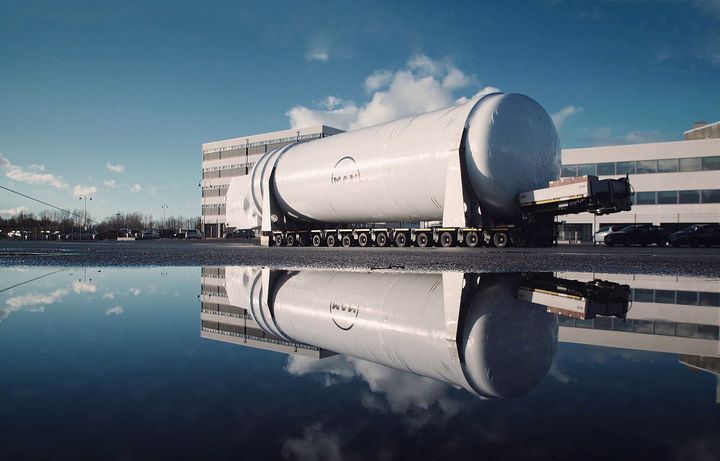
Transportable units used on trucks or trailers for delivering liquefied gases between facilities. They include robust insulation and secure frameworks for safe travel.
Dewars
Small, portable cryogenic containers used mainly in laboratories and research settings to store small volumes of liquid nitrogen or liquid helium.
ISO Cryogenic Containers
Standardized containers built for international shipping via sea, land, and rail. They follow ISO design codes for pressure resistance, durability, and safety.
LNG Storage Tanks
Specialized tanks for liquefied natural gas used in power plants, energy terminals, and fueling stations. They can be above-ground or underground.
Liquid Hydrogen Tanks
Used in aerospace, renewable energy projects, and hydrogen fuel infrastructure. These tanks require extremely high insulation performance due to hydrogen’s low boiling point.
Key Structural Features
Double-Walled Construction
Cryogenic tanks commonly use an inner stainless-steel wall and an outer carbon-steel wall separated by insulating materials.
High-Performance Insulation
Vacuum insulation, perlite, or multilayer insulation systems minimize heat transfer.
Pressure-Relief Mechanisms
Safety valves prevent overpressure buildup within the tank.
Temperature Monitoring Systems
Sensors track internal temperature to maintain stability.
Fill and Withdrawal Connections
Secure fittings ensure leak-free transfer of cryogenic liquids.
Support Frames or Skids
Especially in mobile tanks, frames ensure stability during transport.
Applications Across Industries
Cryogenic tanks support processes across many fields:
Healthcare and Medicine
Used for storage of oxygen, nitrogen, and biological samples.
Energy Sector
Essential for LNG storage, regasification terminals, and hydrogen projects.
Food and Beverage Processing
Liquid nitrogen is used for flash-freezing, packaging, and preservation.
Manufacturing and Metal Processing
Cryogenic liquids support cooling, shrink-fitting, and industrial welding processes.
Scientific Research
Laboratories use cryogenic tanks to support experiments requiring low temperatures.
Aerospace and Space Exploration
Liquid hydrogen and oxygen are used as rocket fuels.
Trends Shaping the Cryogenic Storage Industry
Growth in Hydrogen Energy Projects
With increasing focus on alternative fuels, hydrogen storage solutions are gaining importance.
Advancements in Tank Insulation Technology
Improved multilayer insulation enhances performance and reduces energy loss.
Rise of LNG as a Cleaner Energy Source
LNG continues to play a significant role in power generation and marine shipping.
Adoption of Smart Monitoring Systems
Digital sensors, IoT monitoring, and remote data analytics ensure safer tank management.
Increase in Mobile Cryogenic Solutions
Portable tanks are becoming more common for decentralized medical and industrial needs.
Comparison Table: Types of Cryogenic Tanks
| Tank Type | Application | Capacity Range | Mobility | Key Advantage |
|---|---|---|---|---|
| Stationary Tank | Industrial plants & hospitals | High | None | Long-term large-volume storage |
| ISO Container | Shipping via land & sea | Medium–High | High | Standardized for transport |
| Mobile Tank | Gas delivery & logistics | Medium | High | Safe movement of cryogenic liquids |
| Dewar | Labs & small facilities | Low | High | Easy and lightweight handling |
| LNG Tank | Energy & fuel storage | High | Low–Medium | Suitable for thermal energy projects |
| Hydrogen Tank | Aerospace & energy | Medium | Medium | Supports extremely low temperatures |
How to Choose the Right Cryogenic Tank
Choosing the right tank depends on the type of liquid, usage environment, and operational scale.
Determine Storage Capacity Requirements
Identify daily or monthly liquid consumption to select the correct tank size.
Select the Appropriate Tank Material
Stainless steel is common for low-temperature durability.
Assess Insulation Type
Vacuum insulation offers best thermal performance for long holding times.
Check Mobility Needs
Stationary tanks suit industries; mobile units suit transportation.
Evaluate Safety Features
Look for certified pressure-relief systems and standardized components.
Review Operating Pressure
Ensure compatibility with the intended gas and application.
Consider Maintenance Requirements
Choose designs that allow easy inspection and long insulation life.
Check Compliance Standards
Tanks must meet international or regional codes depending on use.
Usage Tips for Cryogenic Tank Handling
Wear Appropriate Protective Gear
Cryogenic burns can occur from liquid contact.
Avoid Rapid Pressure Changes
Sudden changes may stress the tank’s internal structure.
Ensure Proper Ventilation
Cryogenic gases can displace oxygen in enclosed spaces.
Inspect Valves Regularly
Prevent leaks by checking seals, hoses, and fittings.
Maintain Updated Monitoring Systems
Sensors and gauges must function accurately to ensure safe storage.
Follow Manufacturer Guidelines
Each tank type has specific operational instructions.
Practical Checklist for Operators
-
Verify tank capacity before filling
-
Inspect insulation and outer shell
-
Ensure pressure-relief systems are active
-
Keep valves clean and functional
-
Use proper safety gear
-
Maintain monitoring logs
-
Follow temperature stability guidelines
-
Avoid overfilling or rapid discharge
FAQs About Cryogenic Tanks
What materials are used in cryogenic tanks?
Stainless steel and carbon steel are common due to durability at low temperatures.
How long can a cryogenic tank store liquid?
Duration depends on insulation type, tank size, and ambient conditions.
Are cryogenic tanks safe for transport?
ISO containers and mobile tanks are specifically designed for safe transportation.
What industries use cryogenic tanks the most?
Healthcare, energy, manufacturing, food processing, and research laboratories.
Can cryogenic tanks store different liquids?
Yes, but each tank should be certified for the specific liquid it holds.
Conclusion
Cryogenic tanks play a vital role in supporting industries that rely on extremely low-temperature materials. From scientific laboratories to global energy networks, these tanks ensure reliable, efficient, and safe storage of liquefied gases. As new energy solutions and technology continue to evolve, cryogenic storage systems will remain central to industrial growth and scientific innovation. Understanding the types, features, selection criteria, and safety guidelines helps users make informed decisions and maintain operational safety.