Guide to Selecting the Right Drilling Machine: Features, Types & Smart Choices
A drilling machine is more than a tool—it’s a core asset in workshops, construction sites, manufacturing, or even for serious DIY jobs. Selecting the right machine impacts safety, precision, durability, efficiency, and cost. A mismatch (too little power, wrong type, under-spec) can lead to wasted time, broken tools, safety risks, and higher long-term costs.
Importance: Key Benefits of Getting it Right
-
Ensures proper performance for the materials you work on (wood, metal, concrete, masonry).
-
Improves safety by avoiding overload, slipping, overheating.
-
Enhances quality of work: cleaner holes, correct dimensions, less rework.
-
Saves costs: right machine means fewer breakdowns, better durability, more efficient power use.
-
Increases versatility: a suitable drill machine can serve in more applications.
Recent Trends & Innovations (2024-2025)
-
Increasing popularity of cordless powerful drills with long battery life and fast charging.
-
More models with variable speed and torque control for adaptable performance across materials.
-
Integration of smart sensors for overheating, clutch control, overload protection.
-
Design improvements for ergonomics, reduced vibration, lighter weight.
-
Advancements in drill bits & chuck systems offering better grip, quick changes, long life.
Laws, Standards & Safety Considerations
-
Machines should comply with electrical safety standards relevant in your region.
-
Use of safety features such as overload protection, chip guards, secure chucks, and stable motor housings.
-
Workplaces may require certifications or compliance with industrial safety regulations.
-
Proper training for operators and safe handling procedures are often required by law or workplace safety norms.
Types of Drilling Machines & Their Use Cases
| Type of Drill Machine | Best For | Key Advantages |
|---|---|---|
| Corded Drill | Heavy-duty, continuous work | Higher and consistent power, no battery downtime |
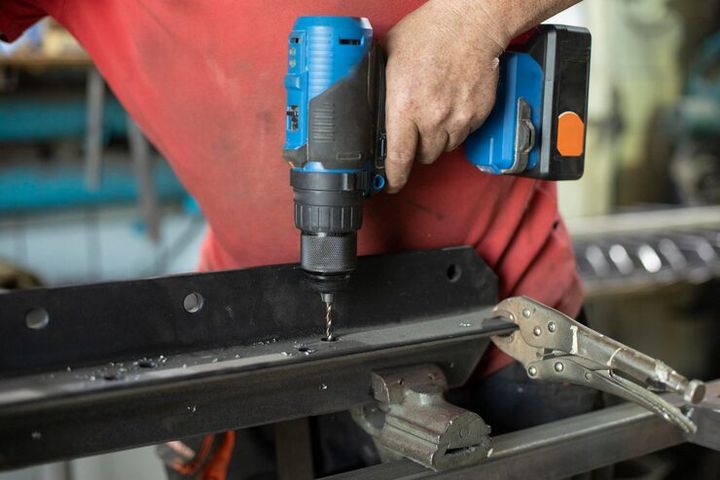
| Cordless Drill | Portability, remote or tight locations | Flexibility, easy movement, battery powered |
| Hammer/Impact Drill | Concrete, masonry, brick | Ability to break hard surfaces, better penetration |
| Drill Press / Bench Drill | Precision drilling, workshops | Stable base, precise depth and angle control |
| Magnetic Drill | Steel construction and fabrication work | Stable on steel surfaces, precise vertical drilling |
| Right-Angle Drill | Accessing tight or awkward spaces | Compact head, can drill or screw in confined spots |
Key Features to Look For
-
Power & Torque: Higher wattage/voltage means better performance on hard materials.
-
Speed Settings: Variable speed lets you adapt to material and bit type.
-
Chuck Size & Type: Larger chuck = bigger bits; keyless or SDS types for convenience.
-
Battery Quality (for cordless): Use lithium-ion batteries that last long and charge fast.
-
Ergonomics & Vibration Control: Comfort in grip, balanced weight, anti-vibration handles.
-
Safety Features: Overload protection, clutch, LED lights for visibility, guards.
-
Durability & Brand Support: Quality build, warranty, service availability, spare parts.
Checklist: Steps to Choosing the Right Drilling Machine
-
Define the materials you’ll drill (wood, concrete, metal, etc.)
-
Determine required power level (how tough are the tasks?)
-
Choose between corded vs cordless depending on mobility need
-
Ensure variable speed & torque controls
-
Verify chuck type and bit compatibility
-
Check safety features and ergonomics specs
-
Review warranty, parts availability, and after-sales support
-
Estimate total cost, including accessories and maintenance
FAQs
Q1. Corded or cordless—which is better?
If you have access to power and need heavy, sustained work, corded is usually better. Cordless is more flexible and portable, but battery life and power limitations may matter for heavy tasks.
Q2. What’s more important—power or precision?
It depends on your project. For hard materials and thick work, power is crucial. For fine, delicate tasks (woodwork, metal finishing), precision and control matter more.
Q3. How does speed and torque control affect performance?
Variable speed lets you adapt to different materials (lower speed for hard/delicate, higher speed for soft or fast drilling). Torque control helps avoid damaging workpiece and improves driving screws or bits.
Q4. Are bigger chucks always better?
Not always: larger chucks let you use bigger bits, but add bulk and weight. For fine or precision work, a smaller, lighter chuck that gives control is better.
Q5. How important is brand and support?
Very important. Good brands often provide better build quality, better spare parts, better safety, and reliable support or service.
Conclusion
Choosing the right drilling machine in 2025 means balancing power, precision, safety, and usability. Understand your use-case, assess key features, verify safety and support, and don’t compromise ergonomics or durability. With the right choice, you’ll get more reliable performance, better quality work, and lower total cost over the life of the machine.