Guide to Smart Farming Equipment: Precision Tools, IoT Devices & Automation for Future Agriculture
Agriculture is evolving at an unprecedented pace. Traditional farming techniques are being enhanced by advanced technologies such as automation, robotics, and artificial intelligence. Smart farming equipment helps farmers collect real-time data, optimise resources like water and fertiliser, and improve yields while maintaining sustainability.
The increasing global demand for food, labour shortages, and unpredictable climate patterns have made digital transformation in agriculture a necessity. From soil sensors to automated irrigation and drones, these technologies are reshaping the future of farming.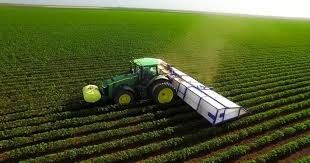
Importance
Smart farming equipment plays a crucial role in modern agriculture for several reasons:
-
Efficiency Gains: Automation and IoT reduce wastage of water, energy, and fertilisers by ensuring accurate resource distribution.
-
Informed Decision-Making: Farmers can make better choices using real-time data on soil conditions, moisture, and crop growth.
-
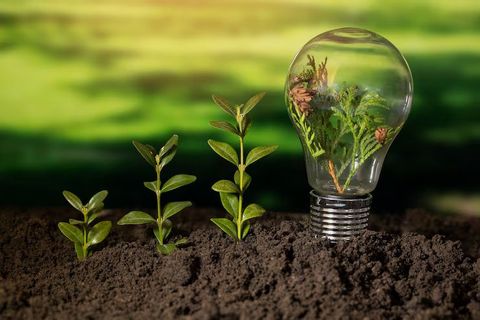
Sustainability: These tools enable precise use of inputs, reducing environmental impact.
-
Labour Optimization: Automated systems reduce the need for manual labour and human error.
Key Types of Smart Farming Equipment
| Equipment Type | Function | Key Benefit |
|---|---|---|
| IoT-Based Smart Monitoring Systems | Collects data on soil, temperature, and moisture | Real-time decision-making |
| Automated Irrigation Systems | Controls water flow automatically | Saves water and energy |
| Smart Soil Sensors | Measures soil pH, moisture, and nutrients | Improves crop yield accuracy |
| Smart Controllers | Integrates multiple devices and systems | Centralized control for farmers |
| Precision Fertilizer Injectors | Automates nutrient distribution | Reduces waste and improves efficiency |
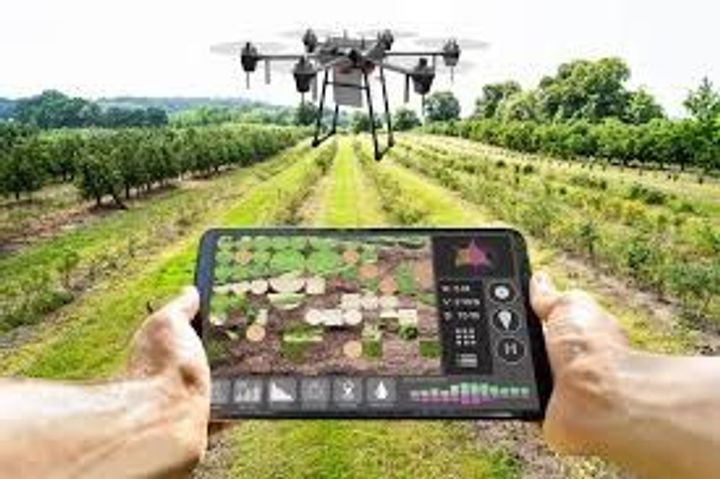
| Smart Drones | Monitors crops and applies pesticides | Increases accuracy and reduces cost |
Features & Considerations
When selecting smart farming equipment, consider:
-
Connectivity & Integration: Choose devices that support IoT networks and integrate with farm management systems.
-
Automation & Control: Look for automated responses such as irrigation scheduling and fertiliser control.
-
Durability: Equipment should be weatherproof and suitable for rough field environments.
-
Ease of Use: Ensure the technology is user-friendly and adaptable for both small and large farms.
-
Data Analytics: Systems that convert sensor readings into actionable insights are most effective.
Applications & Use Cases
-
Soil Health Monitoring: Sensors provide insights into soil composition for accurate planting decisions.
-
Automated Irrigation: Watering systems that activate only when soil moisture drops below optimal levels.
-
Fertilizer Application: Smart injectors distribute nutrients based on soil requirements.
-
Pest and Disease Control: Drones equipped with sensors detect crop stress early and apply targeted solutions.
-
Livestock Monitoring: Devices track animal health, feeding patterns, and location in real time.
Benefits of Smart Farming Equipment
-
Reduced water and fertiliser costs
-
Improved crop yield and quality
-
Efficient energy and resource use
-
Real-time visibility into farm operations
-
Sustainable agricultural practices
-
Enhanced traceability from farm to market
Challenges & Solutions
| Challenge | Suggested Solution |
|---|---|
| High Initial Investment | Start small and scale gradually |
| Connectivity Limitations | Use hybrid IoT and satellite systems |
| Lack of Technical Skills | Provide farmer training and support |
| Data Overload | Use analytics dashboards with key performance indicators |
| Equipment Maintenance | Choose durable, service-supported machinery |
FAQs
Q1. What is smart farming equipment?
Smart farming equipment includes automated systems, sensors, and digital tools designed to improve productivity, reduce waste, and make data-driven agricultural decisions.
Q2. Is smart farming suitable for small farms?
Yes. Affordable IoT devices and modular systems now allow even small farms to adopt automation in stages.
Q3. How does smart equipment increase profits?
By reducing input costs, improving yields, and helping farmers make better operational decisions.
Q4. What technologies are commonly used?
IoT, robotics, AI, data analytics, and remote sensing are the foundation of smart agriculture systems.
Q5. How does smart farming support sustainability?
Precision tools help minimise resource use and lower greenhouse emissions, contributing to eco-friendly farming.
Conclusion
Smart farming equipment has become a cornerstone of modern agriculture. Through automation, IoT sensors, and real-time data collection, it enables farmers to enhance productivity, cut operational costs, and promote sustainability.
From small family-owned farms to large-scale commercial operations, adopting smart agricultural technology ensures better efficiency, improved yield, and long-term environmental balance.