What Is an Industrial Chiller? A Complete Guide to Cooling Systems
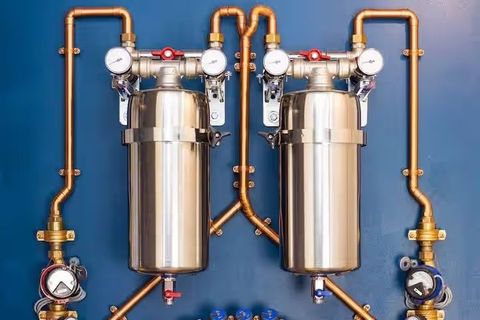
An industrial chiller is a mechanical device used to remove heat from a process or environment and transfer it elsewhere, usually through a heat exchanger. In simple terms, chillers help cool equipment, fluids, or air in a wide range of industrial settings. They’re essential for industries such as plastics, pharmaceuticals, food and beverage, chemicals, HVAC (heating, ventilation, and air conditioning), and metal fabrication.
These systems typically use refrigerant cycles, where heat is extracted from a liquid via vapor-compression or absorption methods, then dissipated through cooling towers, water, or air. The goal is consistent temperature control, which is crucial for equipment longevity, product quality, and operational efficiency.
Why Industrial Chillers Matter
Supporting Industrial Processes
Industrial chillers play a key role in ensuring the stability and efficiency of processes that require strict temperature control. Some examples include:
Plastic manufacturing – where molds must be cooled quickly to maintain shape and quality.
Beverage production – where fermentation and storage temperatures need to be precise.
Medical imaging (e.g., MRI machines) – which generate a lot of heat during operation.
Laser cutting and welding – where heat dissipation is necessary for precision and safety.
Reducing Equipment Downtime
Without proper cooling, machinery can overheat, leading to shutdowns, product defects, and high maintenance costs. Chillers help extend the lifespan of equipment and reduce energy waste by maintaining optimal temperatures.
Energy and Environmental Considerations
Industrial chillers are also crucial in today’s energy-conscious and climate-aware landscape. Modern systems are designed to be more energy-efficient and environmentally friendly, aligning with corporate sustainability goals and government regulations.
Recent Trends and Innovations (2024–2025)
The industrial chiller industry has seen several updates in the past year, driven by technology and environmental concerns.
Smart Control Systems
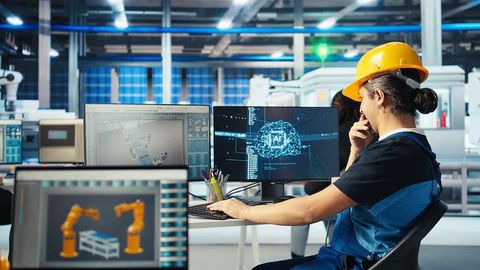
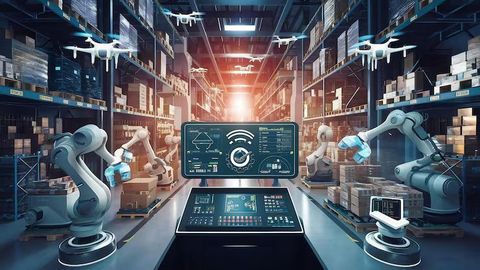
In 2024, many manufacturers began integrating IoT (Internet of Things) and AI-powered control systems into their chillers. These allow:
Real-time monitoring of temperature, flow, and energy consumption
Predictive maintenance alerts
Remote system diagnostics
Eco-Friendly Refrigerants
Regulations continue to push the industry away from high-GWP (Global Warming Potential) refrigerants. As of early 2025, there’s a growing shift toward natural refrigerants like CO₂, ammonia, and hydrocarbons (e.g., propane), which are less harmful to the environment.
Modular and Scalable Designs
With industries moving toward decentralized and scalable operations, there’s increasing demand for modular chiller units. These can be added or removed depending on need, offering more flexibility and easier maintenance.
Energy Efficiency Standards
Energy consumption is a major concern. In 2024, many new industrial chillers started incorporating variable-speed compressors, which adjust performance based on real-time demand, significantly improving energy efficiency.
Regulations, Policies, and Compliance
Industrial chillers are subject to various environmental and energy-related regulations, depending on the region. Here are some key global and national frameworks:
United States
EPA SNAP Program (Significant New Alternatives Policy): Regulates the use of refrigerants to reduce environmental impact.
ASHRAE Standards (e.g., 90.1 and 15): Guide energy efficiency and safety in HVAC systems, including chillers.
DOE Efficiency Standards: U.S. Department of Energy mandates minimum performance standards for commercial and industrial cooling systems.
European Union
F-Gas Regulation: Aims to phase down the use of fluorinated greenhouse gases in refrigerants. Updated restrictions took effect in 2024.
EcoDesign Directive: Sets requirements for energy-using products, including chillers.
Asia-Pacific
Countries like Japan, South Korea, and China have adopted similar bans on high-GWP refrigerants.
India’s Kigali Amendment roadmap requires gradual HFC phase-out aligned with global environmental goals.
Workplace Safety
OSHA (Occupational Safety and Health Administration) and equivalent agencies in other countries require that chiller systems meet safety codes for pressure vessels, electrical connections, and refrigerant handling.
Helpful Tools and Resources
For operators, engineers, or facility managers, several tools and platforms can simplify chiller selection, monitoring, and compliance:
Online Calculators
| Tool Name | Purpose | Website |
|---|---|---|
| HVAC Load Calculator | Estimates cooling load requirements | energy.gov |
| Chiller Selection Tool | Compares chillers based on industry & capacity | Carrier |
| Refrigerant GWP Calculator | Assesses environmental impact of refrigerants | IPCC |
Monitoring Apps
Trane Connect™ – Allows remote chiller diagnostics and scheduling
Johnson Controls Metasys® – Integrates chiller data into smart building systems
Danfoss Ref Tools – Handy for technicians working with refrigerants and chillers
Industry Associations
ASHRAE – Offers free standards and educational resources
IIAR (International Institute of Ammonia Refrigeration) – Covers safety and best practices
AHRI (Air-Conditioning, Heating, and Refrigeration Institute) – Provides certifications and product directories
Common Types of Industrial Chillers
Here's a quick breakdown of the most common chiller types:
| Chiller Type | Cooling Medium | Typical Use Case | Advantages |
|---|---|---|---|
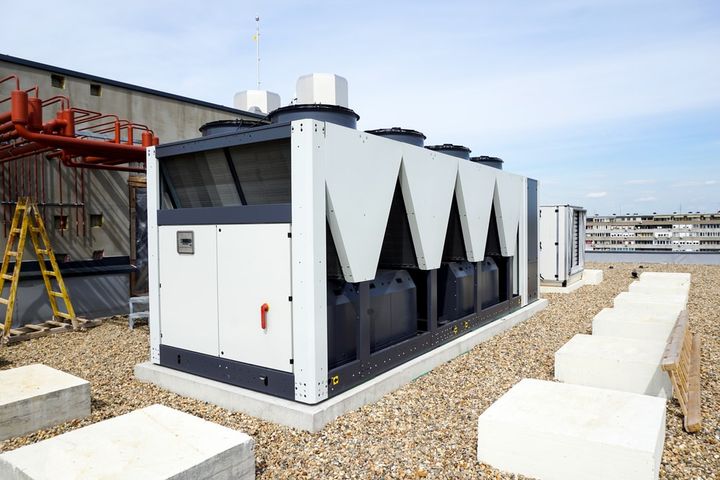
| Air-Cooled | Air | Outdoor systems, low humidity climates | Easy to install, low maintenance |
| Water-Cooled | Water | Large-scale systems, factories, hospitals | More efficient, quieter operation |
| Absorption Chillers | Water (via heat) | Facilities using waste heat or steam | Eco-friendly, uses waste energy |
| Screw Chillers | Air/Water | Continuous, large-load applications | Efficient, fewer moving parts |
| Scroll Chillers | Air/Water | Small to mid-sized loads | Quiet, compact, reliable |
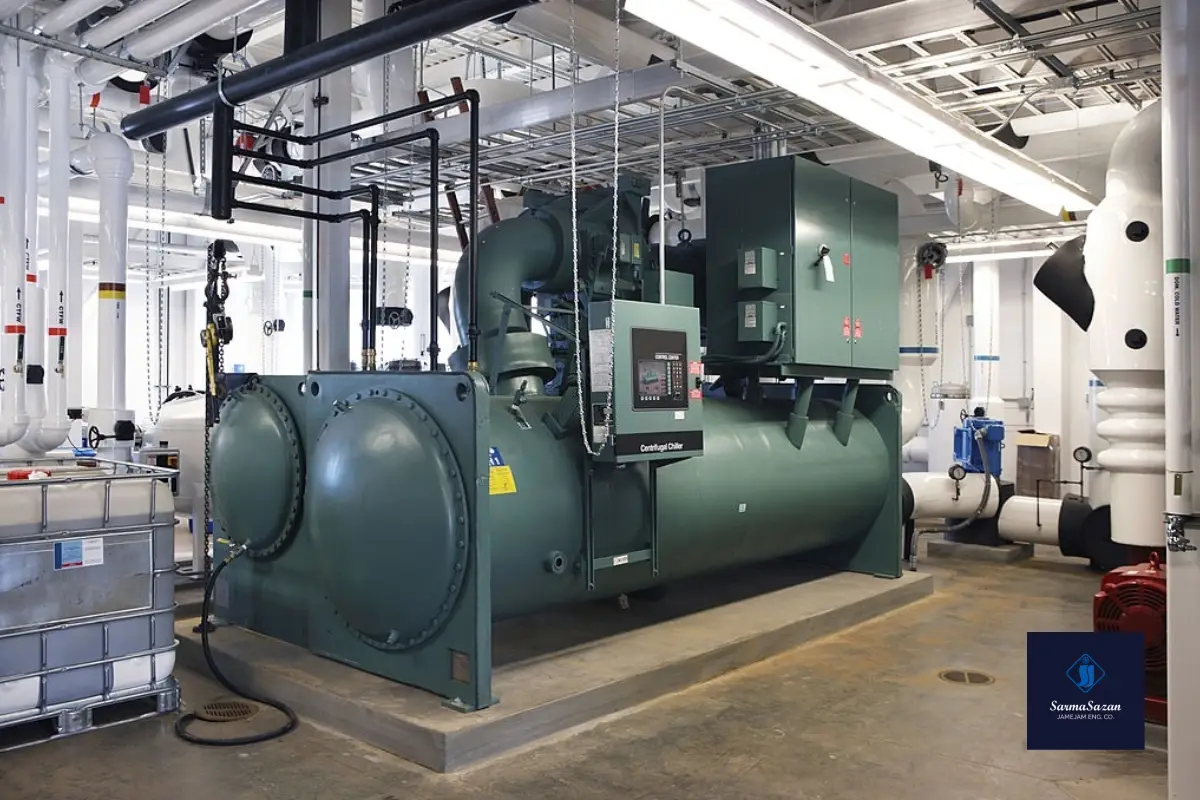
| Centrifugal Chillers | Water | High-capacity, centralized plants | High efficiency at full load |
Frequently Asked Questions (FAQs)
What is the difference between air-cooled and water-cooled chillers?
Air-cooled chillers use ambient air to remove heat and are typically used outdoors.
Water-cooled chillers require a separate cooling tower and water supply but are more efficient and better for larger applications.
Are industrial chillers energy-efficient?
Yes, especially modern models with variable speed drives, high-efficiency compressors, and smart controls. Energy efficiency varies depending on system size, usage, and maintenance.
How often should a chiller be maintained?
Daily checks: System pressure, fluid levels, and temperatures
Monthly: Clean filters, inspect controls
Annually: Full inspection, fluid analysis, refrigerant leak test
What refrigerants are commonly used in chillers?
Can chillers operate in extreme weather?
Final Thoughts