Guide to Choosing the Right Dewatering Equipment for Industrial Projects
Dewatering equipment plays a crucial role in industries such as construction, mining, oil and gas, and wastewater treatment. The right choice of equipment not only ensures operational efficiency but also minimizes environmental impact and project costs. With the growing focus on automation, energy efficiency, and sustainability, businesses must evaluate their options carefully.
This guide explores the different types of dewatering equipment, their applications, key selection criteria, and future trends shaping industrial projects worldwide.
Importance of Dewatering in Industrial Projects
Dewatering is the process of removing groundwater, wastewater, or excess moisture from soil, construction sites, or mining pits. Effective dewatering is essential to:
-
Maintain safe and stable working conditions.
-
Prevent flooding and soil erosion.
-
Improve construction speed and mining productivity.
-
Ensure compliance with environmental regulations.
-
Optimize operational efficiency and reduce downtime.
Types of Dewatering Equipment
Choosing the right equipment depends on the site conditions, project scale, and industry requirements. Common types include:
-
Centrifugal Pumps
-
Used in construction and mining.
-
Ideal for handling large volumes of water quickly.
-
-
Submersible Pumps
-
Placed underwater for continuous operation.
-
Suitable for deep excavations and high-capacity needs.
-
-
Vacuum Pumps
-
Remove water and air simultaneously.
-
Useful for wellpoint dewatering systems in soft soils.
-
-
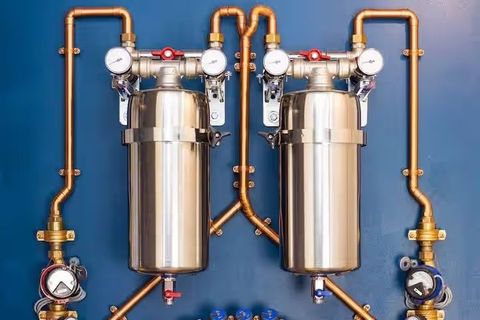
Filter Presses
-
Used in industrial wastewater treatment.
-
Provide efficient solid-liquid separation.
-
-
Sludge Dewatering Systems
-
Designed for municipal and industrial wastewater.
-
Reduces disposal costs by minimizing sludge volume.
-
-
Wellpoint Systems
-
Create negative pressure to draw groundwater.
-
Effective in sandy and fine-grained soils.
-
-
Geotextile Dewatering Bags
-
Eco-friendly and cost-effective.
-
Ideal for small-scale projects and sediment control.
-
Applications of Dewatering Equipment
Dewatering equipment is applied across multiple sectors:
-
Construction: Site preparation, foundation stabilization, and tunnel excavation.
-
Mining: Removing groundwater from pits, processing slurry, and tailings management.
-
Industrial Plants: Sludge treatment and water recycling.
-
Oil & Gas: Onshore and offshore drilling operations.
-
Municipal Projects: Stormwater management and wastewater treatment.
Checklist for Choosing Dewatering Equipment
When selecting the right equipment, consider the following:
-
Soil type and groundwater conditions
-
Depth of excavation or mining pit
-
Required pumping capacity
-
Energy efficiency and operating cost
-
Maintenance requirements
-
Environmental compliance standards
-
Equipment lifespan and durability
Comparison Table: Dewatering Equipment
| Type | Best For | Advantages | Limitations |
|---|---|---|---|
| Centrifugal Pump | Construction, mining | High capacity, reliable | Not ideal for fine solids |
| Submersible Pump | Deep excavation, continuous pumping | Durable, low noise | Requires power supply |
| Vacuum Pump | Wellpoint systems | Handles air and water together | Higher energy use |
| Filter Press | Industrial wastewater | High solid recovery | Slower cycle times |
| Sludge Dewatering System | Wastewater plants | Reduces disposal costs | Initial investment high |
| Wellpoint System | Soft, sandy soils | Cost-effective for shallow digs | Limited to certain soils |
| Geotextile Bag | Sediment control, small projects | Eco-friendly, low-cost | Limited capacity |
Future Trends in Dewatering Equipment
By 2025 and beyond, industrial dewatering is being shaped by:
-
Automation & Remote Monitoring: IoT-enabled pumps allow predictive maintenance.
-
Energy-Efficient Motors: Reduced power consumption in large-scale operations.
-
Sustainable Solutions: Geotextile bags and eco-friendly filters gaining adoption.
-
AI & Predictive Analytics: Smart monitoring to optimize water management.
-
Hybrid Systems: Combining pumps, filters, and automation for maximum efficiency.
FAQs on Dewatering Equipment
Q1. What is the most commonly used dewatering method in construction?
The most common is the wellpoint system, as it efficiently lowers groundwater in shallow excavations.
Q2. How does dewatering improve project safety?
It prevents soil instability, flooding, and machinery damage, ensuring a stable work environment.
Q3. What is the role of automation in dewatering equipment?
Automation reduces downtime, monitors water levels, and ensures pumps operate efficiently.
Q4. Can dewatering equipment be used in environmental projects?
Yes, especially in stormwater management, wastewater treatment, and sediment control.
Q5. Which industries benefit most from sludge dewatering systems?
Municipal wastewater treatment plants, food processing industries, and chemical manufacturing.
Conclusion
Choosing the right dewatering equipment for industrial projects is not a one-size-fits-all decision. It requires evaluating soil conditions, water levels, energy requirements, and environmental factors. With growing trends in automation, sustainability, and cost-efficiency, industries must adopt modern solutions that enhance productivity while reducing risks.
Whether for construction, mining, or wastewater management, selecting the right system ensures long-term efficiency and safety.