Industrial Welding Automation: An Informative Overview of Processes and Technology
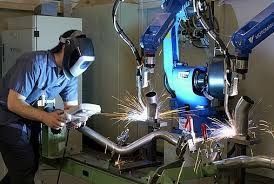
Industrial welding automation refers to the use of robotic systems, automated machinery, and advanced technologies to perform welding tasks with precision and consistency. It was developed to support industries that require high-quality welds, repetitive operations, and enhanced productivity. Automation in welding integrates robotics, sensors, control systems, and software to deliver uniform results across large-scale production environments.
Welding automation exists because traditional manual welding, while skilled and valuable, can face limitations in speed, accuracy, and repeatability. With the rise of complex industrial designs and increasing expectations for structural reliability, automated welding systems became essential. Today, sectors such as automotive, aerospace, heavy machinery, metal fabrication, and energy rely heavily on automated welding processes.
Importance
Industrial welding automation is important because it enhances efficiency, consistency, and quality in manufacturing environments. Automated systems help industries create uniform welds while reducing errors associated with manual techniques. This benefits engineers, production managers, manufacturers, and quality assurance teams who depend on reliable weld strength.
Automation also supports complex designs that require precise heat control, speed regulation, and multi-angle welding. By maintaining consistent parameters, automated welding reduces defects, improves structural integrity, and minimizes rework. Industries also use automation to maintain stable production flow during long or repetitive operations.
Welding automation helps solve problems related to inconsistent weld quality, slow production cycles, limited scalability, and high scrap rates. It supports advanced manufacturing processes where tight tolerances and repeat accuracy are essential. As factories move toward digitized and interconnected systems, automated welding adds value by improving traceability and allowing real-time monitoring.
Recent Updates
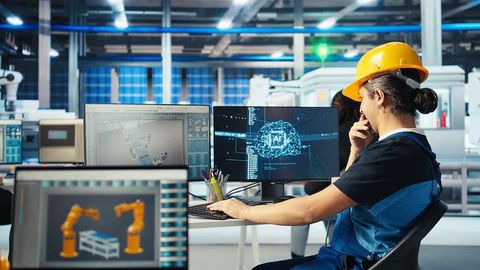
Several updates from 2024–2025 have influenced the development of industrial welding automation. In late 2024, many companies integrated artificial intelligence into welding robots, allowing systems to adjust parameters automatically based on joint geometry, heat distribution, and metal thickness.
Sensor-driven welding systems introduced in early 2025 improved precision by using cameras, thermal sensors, and laser scanners to evaluate weld quality during the process. Cloud-connected welding controllers became more common, allowing engineers to access performance data remotely.
The adoption of collaborative welding robots increased in 2024–2025, especially in small and medium industrial units. These robots, known as cobots, are designed to assist human operators by performing controlled welding operations with minimal setup.
Energy-efficient welding machines gained attention as industries focused on reducing environmental impact. Furthermore, advancements in arc welding, laser welding, and friction stir welding improved automation capabilities and enabled more complex applications.
Laws or Policies
Industrial welding automation is affected by regulations governing safety, equipment standards, and manufacturing practices. Many regions follow international standards such as ISO, IEC, and AWS guidelines that outline requirements for welding methods, machine performance, and quality assurance.
Worker safety regulations require automated welding systems to include emergency controls, protective barriers, and monitoring tools. Industrial plants must comply with rules related to electrical safety, robotic operation zones, and equipment maintenance.
Environmental guidelines encourage the use of low-emission technologies, energy-efficient systems, and proper ventilation during welding operations.
Government initiatives promoting digital transformation and advanced manufacturing also influence the adoption of welding automation. These programs encourage industries to use smart monitoring, data logging, and automated performance tracking to improve transparency and quality control.
Tools and Resources
A wide range of tools and resources support industrial welding automation.
Common Types of Automated Welding Systems
-
Robotic arc welding systems
-
Laser welding machines
-
Spot welding automation units
-
Friction stir welding equipment
-
Automated MIG/TIG welding platforms
-
Gantry welding robots for large structures
-
Collaborative welding robots (cobots)
Helpful Digital Tools
-
Weld parameter monitoring apps
-
Automated quality inspection software
-
Robotic programming interfaces
-
Cloud-based weld data management dashboards
-
Predictive maintenance tools
-
Digital twin simulation software
Useful Resources
-
Weld configuration templates
-
Robotic welding setup checklists
-
Arc stability measurement charts
-
Material compatibility reference tables
-
Thermal profile calculators
Table: Common Automated Welding Methods and Their Uses
| Welding Method | Key Function | Industry Use |
|---|---|---|
| Robotic Arc Welding | Creates strong, consistent joints | Automotive, Metal Fabrication |
| Laser Welding | Provides precise, clean welds | Electronics, Aerospace |
| Spot Welding Automation | Joins sheet metals | Automotive Manufacturing |
| Friction Stir Welding | Produces solid-state joints | Aerospace, Transportation |
| MIG/TIG Automation | High accuracy for metals | Heavy Machinery, Fabrication |
FAQs
What is industrial welding automation?
Industrial welding automation refers to the use of robotic systems and automated machinery to perform welding operations with consistency, precision, and repeat accuracy.
Which industries use welding automation the most?
Automotive, aerospace, metal fabrication, heavy machinery, construction, and energy sectors widely use automated welding systems.
Are welding robots replacing manual welders?
Automated systems support repetitive and precision-based tasks, but manual welding remains essential for complex, artistic, or custom applications. Automation complements rather than replaces human skills.
What are the benefits of automated welding?
It improves accuracy, enhances structural consistency, reduces errors, and supports high-volume production with standardized quality.
Does welding automation require special programming?
Modern welding robots often use simplified interfaces or teach-pendant programming, making them easier to operate without advanced coding knowledge.
Conclusion
Industrial welding automation has become a key element in modern manufacturing, offering greater precision, consistency, and efficiency across various sectors. With advancements in robotics, artificial intelligence, and digital monitoring, welding automation continues to evolve toward smarter, safer, and more capable systems. As industries adopt higher performance standards and require scalable production methods, automated welding plays an essential role in improving quality and reliability.
This overview provides an informative understanding of how welding automation works, why it is important, and how it continues to shape industrial environments.